Stay ahead of dynamic threats and achieve business priorities.
- Gartner client? Log in for personalized search results.
A cybersecurity roadmap should align investments to enterprise objectives
By 2028, 80% of CISOs will face a board-level mandate to connect cybersecurity investments to tangible business outcomes. The cybersecurity landscape is rapidly evolving as threats and regulatory changes impact the organization’s program and strategy. An effective cybersecurity strategy requires an adaptive roadmap that balances immediate protection with long-term readiness.
A cybersecurity roadmap is a key deliverable of security strategies. It turns high-level vision into an actionable — and adaptable — plan, aligning every initiative with business priorities.
You might also like this webinar: Top Trends in Cybersecurity for 2026
Build your cybersecurity roadmap for strategic impact
A clear roadmap is more than a project list. It’s a living document that links your cybersecurity vision to enterprise strategy and measurable results. Here’s how you build, communicate and sustain a roadmap that secures buy-in and drives business value.
Identify key drivers to anchor your cybersecurity strategy
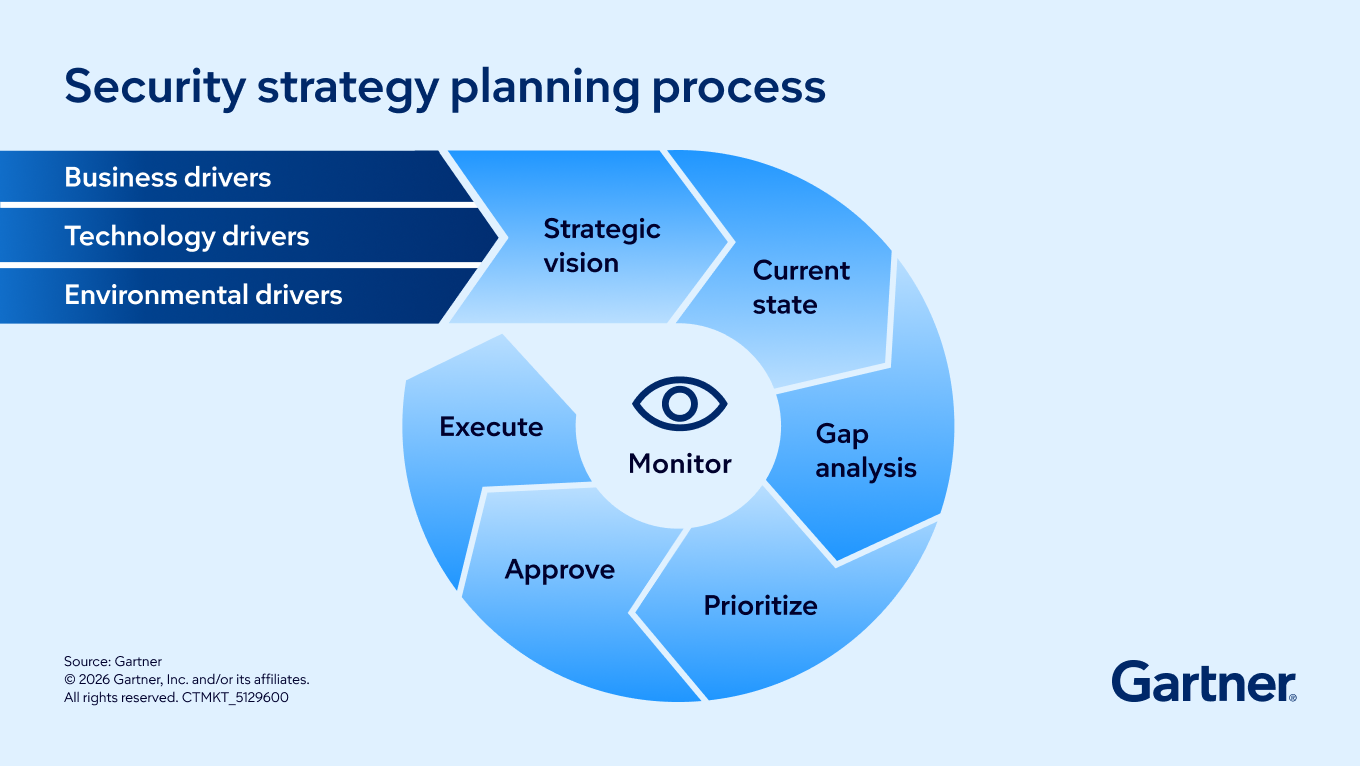
Start with understanding the fundamental business, technological and environmental (BTE) drivers that impact your organization’s strategy and shape the cybersecurity vision. Gartner recommends interviewing business leaders, reviewing strategic plans and scanning the external landscape for regulatory, market and technology shifts. Use these drivers as the foundation for your roadmap. As Senior Principal Analyst Fadeen Davis notes, “By rooting the roadmap in these drivers, CISOs can ensure that most cybersecurity projects included in the roadmap are clearly mapping to a business objective that resonates with nontechnical executive stakeholders.”
Define your target state with strategic alignment
Translate your vision into a clear target state. Specify what success looks like, using your strategic vision and BTE drivers to set measurable future goals. Outline capabilities, risk posture and business outcomes you want to achieve. This clarity ensures your roadmap is both ambitious and realistic, and resonates with executive stakeholders who require measurable results.
Assess current state and map the gaps
Get a clear-eyed view of the current program maturity. Use multiple assessments — such as a risk and vulnerability assessment, and control and process effectiveness checks — to assess your current state. List the cybersecurity initiatives needed to close those gaps, keeping your plan actionable.
Prioritize initiatives for maximum business value
Prioritize based on risk reduction, resource needs, cost, time to value and strategic alignment. Gartner recommends using a scoring model to focus on initiatives that deliver the most business impact, and to communicate this rationale to executives for buy-in.
Communicate, monitor and adapt
Regularly share the cybersecurity strategy progress and rationale with executives. Use dashboards, progress reviews and business-outcome stories to maintain alignment. Monitor the landscape for shifts in regulations, technology, operating model and evolving threats. Continuous adaptation keeps your strategy agile and relevant, and your initiatives credible.
What’s next in cybersecurity strategy
By aligning cybersecurity initiatives to business objectives through a clear roadmap, CISOs can establish the direction, governance and accountability needed to drive measurable outcomes. This is a critical step in the CISO’s mandate to build and evolve a resilient and agile cybersecurity program.
For public sector leaders, cybersecurity outcomes are measured not only by risk reduction but also by maintaining citizen trust. Learn how government CISOs are strengthening security programs while safeguarding public confidence and mission delivery.
Cybersecurity roadmap FAQs
How does a cybersecurity roadmap help CISOs achieve business goals?
A cybersecurity roadmap translates high-level strategy into an actionable plan, aligning every initiative with business priorities. A clear roadmap helps CISOs demonstrate how security investments drive tangible business outcomes.
How often should the cybersecurity roadmap be updated?
Review and update your roadmap regularly in response to environmental changes, new threat intelligence, vulnerability assessments and scenario planning. CISOs should enact quarterly reviews to keep the roadmap relevant and aligned with evolving business objectives.
Attend a Conference
Accelerate growth with Gartner conferences
Gain exclusive insights on the latest trends, receive one-on-one guidance from a Gartner analyst, network with a community of your peers and leave ready to tackle your mission-critical priorities.

Drive stronger performance on your mission-critical priorities.