Ad hoc workload placement drives cloud sprawl and inefficiency. Structured policies unlock better outcomes.
- Gartner client? Log in for personalized search results.
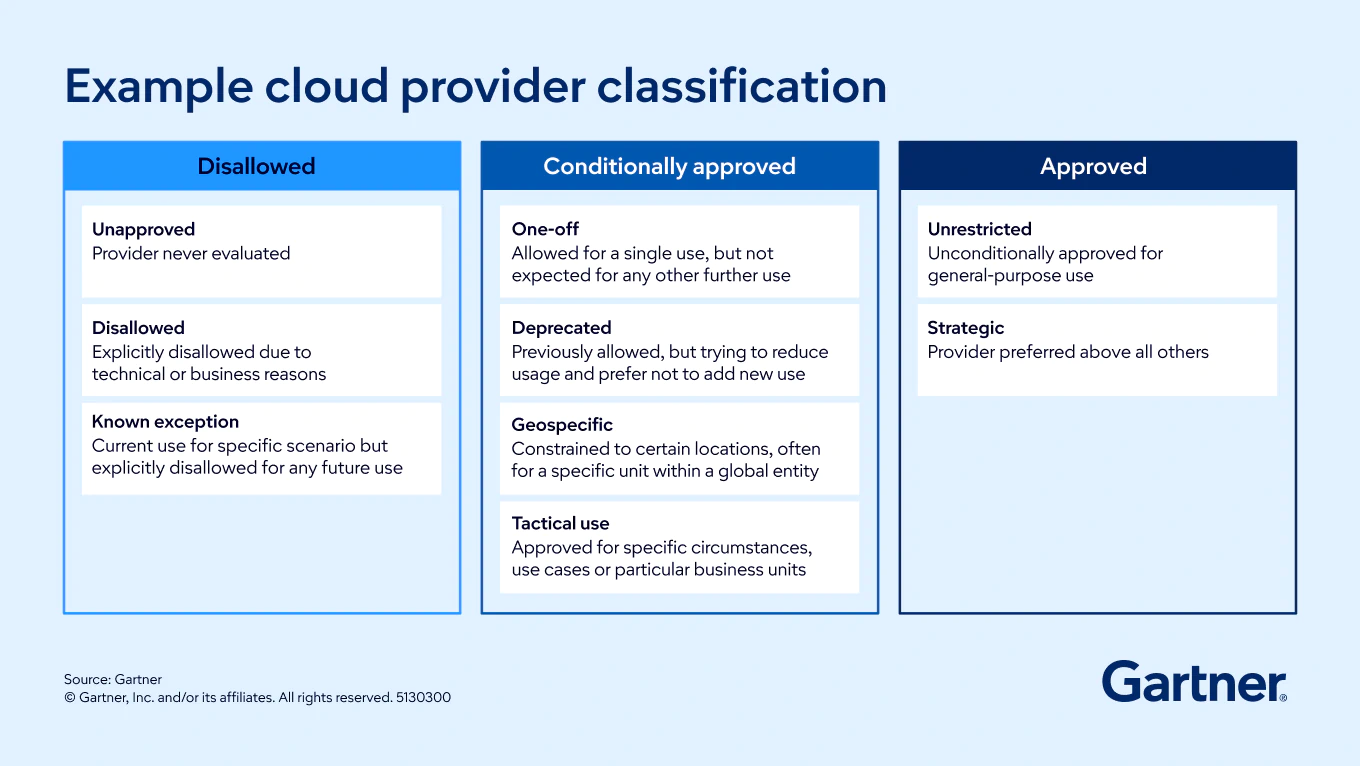
Workload placement challenges undermine cloud efficiency
Organizations often fall into the trap of placing workloads in the cloud based on individual preferences or ad hoc decisions. As Gartner Senior Director Analyst Ted McHugh notes, “Without clear governance, teams struggle to maintain consistency, resulting in fragmented environments that are harder to manage and optimize.” The urgency to address these issues grows as multicloud adoption and cloud costs increase, making workload placement a strategic priority for both IT and business leaders.
You might also like this webinar: Data and Analytics 2030: The Vision for an AI‑Native Enterprise
Workload placement policies drive operational and strategic gains
A formal workload placement policy, governed by a Cloud Center of Excellence (CCOE), is essential for maximizing cloud value and reducing risk. Gartner recommends structuring these policies around four group decision factors, ensuring architects and cloud teams make efficient, compliant choices that align with organizational goals.
Provider limitations shape placement decisions
Each cloud provider has unique limitations, including service availability, regulatory compliance and regional coverage. A strategic policy helps teams evaluate these constraints early, avoiding costly mistakes and ensuring workloads are placed where they can operate reliably and securely.
System integrations impact operational efficiency
According to Gartner, system integration requirements primarily dictate where workloads should reside. Placing workloads without considering integration complexity can lead to operational silos and increased maintenance burdens. A structured policy ensures integration mapping is prioritized, enabling seamless communication between systems and minimizing technical debt.
Workload affinities influence cloud choices
Organizational preferences — such as vendor relationships, skill sets and cultural fit — play a significant role in workload placement. While these affinities can support smoother adoption, leaders should balance them against technical and cost considerations to avoid bias-driven decisions that undermine long-term efficiency.
Technical fit and total cost of ownership drive value
Evaluating technical requirements and total cost of ownership (TCO) are core factors in workload placement. This ensures workloads are matched to environments that support performance, scalability and cost-efficiency. Limiting cost-driven exceptions to short-lived or isolated cases prevents policy erosion and keeps strategic objectives intact.
Workload placement policy: Actionable steps for improvement
To strengthen workload placement, organizations should:
Implement accessible, prescriptive policies enforced early in the process
Empower architects with decision-support tools and clear classification schemes to reduce committee delays and drive consistent outcomes
Regularly review placement policies and track KPIs, including policy adherence, provider utilization, decision cycle time, integration mapping and governance enforcement, to ensure ongoing optimization
Workload placement policy enables cloud alignment
A disciplined, policy-driven approach to workload placement reduces risk, maximizes cloud value and aligns operational decisions with strategic business goals. Organizations that prioritize structured governance achieve greater efficiency and minimize technical debt, setting the foundation for sustainable multicloud success.
What’s next for D&A workload placement
Assessing, selecting and implementing technology, practices and tools is a critical step in the CDAO’s mandate to redefine D&A and AI governance. For more on how Gartner helps drive success on this and other mission-critical priorities for CDAOs, speak to us today.
Workload placement FAQs
How does workload placement impact cloud costs?
Ad hoc workload placement often leads to provider sprawl and higher costs. A formal policy, structured around decision factors like technical fit and TCO, helps organizations avoid unnecessary expenses and maximize cloud value.
What are the key factors in workload placement policy?
The five core decision factors are provider limitations, system integrations, workload affinities, technical fit and TCO. These guide efficient, compliant workload placement decisions.
Why should organizations limit cost-driven workload placement exceptions?
Gartner recommends restricting cost-driven exceptions to short-lived or isolated cases. Too many exceptions can undermine the policy and lead to inefficiency, technical debt and misalignment with strategic goals.
Attend a Conference
Experience Applications conferences
With exclusive insights from Gartner experts on the latest trends, sessions curated for your role and unmatched peer networking, Gartner conferences help you accelerate your priorities.
1 – 2 Mar 2027
Gartner Digital Workplace Summit
San Diego, CA

Drive stronger performance on your mission-critical priorities.