LONDON, U.K., May 12, 2026
- Gartner client? Log in for personalized search results.
In the AI Era, Trust Scarcity Is Rewriting the Rules of Brand Growth
Q&A with Amy Abatangle

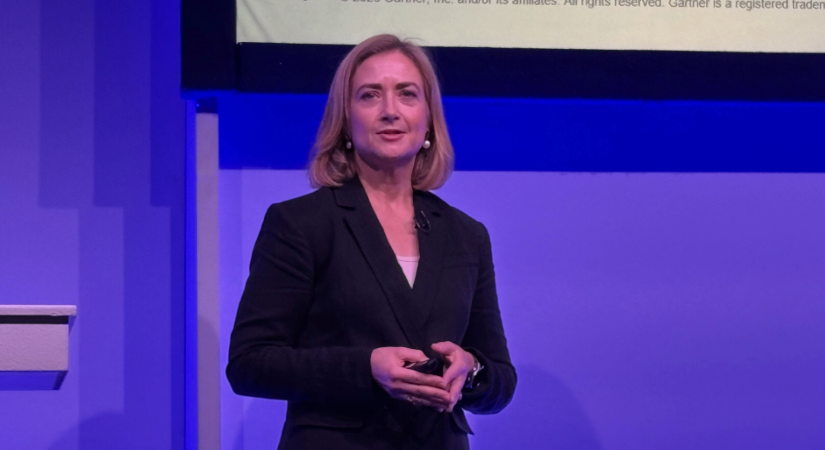
Amy Abatangle
VP Analyst, Gartner
As AI transforms how people discover, evaluate and buy, brands are entering a new scarcity: not attention, but trust. In an environment where content is abundant and inexpensive to produce, credibility signals - trusted human points of view, expert proof and community advocacy - are becoming the differentiators that determine discoverability, preference and long-term growth.
From the Gartner Marketing Symposium/Xpo in London, we spoke with Amy Abatangle, VP Analyst in the Gartner Marketing Practice, about why trust is the new moat, what human experience (HX) means in practice, and how CMOs can operationalize human-centric brand strategies without defaulting to “more content” or “more personalization” as the answer.
Journalists who would like to speak with Amy regarding this topic can contact Jordan.Brackenbury@gartner.com. Members of the media can reference this material in articles with proper attribution to Gartner.
Q: Why are we seeing a shift from “attention scarcity” to “trust scarcity”?
A: For the last decade, brands competed for attention in a world where content was comparatively expensive to produce. AI flips that dynamic: content becomes abundant and low-cost, which changes what’s scarce and valuable (see Figure 1).
Now, trust is scarce. A Gartner survey of over 1,000 UK consumers conducted in August to September 2025 found just 60% of consumers trust big brands, down from 70% in 2021.
Figure 1:
![[Image Alt Text for SEO]](https://emt.gartnerweb.com/ngw/globalassets/en/newsroom/images/graphs/abatangle-qa-sym.png)
Source: Gartner (May 2026)
In AI-shaped feeds, search, recommendations - and eventually agentic buying experiences - brands increasingly win (or lose) based on trust signals, such as advocacy, consistency and expert proof. In this context, brand building becomes intentional trust-signal design, and trust influences not just preference, but discoverability. When trust becomes scarce, brands must focus on creating credibility instead of just reach.
Q: What is HX, and why does it matter?
A: HX is any person (or personified proxy) who mediates trust, meaning and decision-making between a brand and its audience. HX is the portfolio of human interactions a brand deliberately deploys to earn trust—such as creators, earned experts, executives, employees and frontline teams, and sometimes proxies like mascots, avatars or AI personas.
By 2030, enterprises that govern HX as a formal brand system will increase customer lifetime value by 20% versus peers that fail to actively manage human touchpoints.
Gartner’s HX framework highlights four elements that HX must balance:
Authenticity: narrative clarity, transparency and relevance
Expertise: credible, actionable guidance
Belonging: reinforcement of shared identities and values
Reliability: consistent delivery of the brand promise
"By 2030, enterprises that govern HX as a formal brand system will increase customer lifetime value by 20% versus peers that fail to actively manage human touchpoints." - Amy Abatangle, VP Analyst at Gartner
Q: What should CMOs do to humanize their brand?
A: CMOs should govern HX as they would other aspects of their brand experience by:
Mapping where human trust is scarce and defensible by building journey maps that include AI agents and machine-led paths, identifying the moments where only a human can change belief, emotion or decision.
Prioritizing high-impact human touchpoints, focusing humans on negotiations, complex service recovery, escalations and community activation.
Embedding human-in-the-loop governance, auditing workflows to determine where humans oversee, augment or override AI.
Establishing HX metrics, by looking for trust signals, such as advocacy, references or expert proof or measuring impact on customer journeys.
Equipping humans to succeed, developing role-specific narrative playbooks for key roles.
Gartner is the World Authority on AI
Gartner is an indispensable partner to C-Level executives and technology providers as they implement AI strategies to achieve their mission-critical priorities. The independence and objectivity of Gartner insights provide clients with the confidence to make informed decisions and unlock the full potential of AI. Clients across the C-Level are using Gartner's proprietary AskGartner AI tool to determine how to leverage AI in their business. With more than 2,500 business and technology experts, 6,000 written insights, as well as more than 4,000 AI use cases and case studies, Gartner is the world authority on AI. More information can be found here.
About the Gartner Marketing Symposium/Xpo
The Gartner Marketing Symposium/Xpo is taking place May 11-12 in London and June 8-10 in Denver, providing marketing leaders with actionable advice about the trends, tools and emerging technologies they need to deliver business results in an AI-driven world. Gartner analysts address the biggest opportunities, challenges and priorities marketers face today, including CMO leadership, marketing strategy and customer engagement. Follow news and updates coming out of the conference on the Gartner Newsroom and on X and LinkedIn using #GartnerMKTG.
About Gartner for Marketers
Gartner for Marketers provides the objective, expert advice, and proven tools that CMOs and other marketing leaders need to seize the right opportunities with clarity and confidence, and to stay ahead of the trends that matter. With in-depth research and analysis, Gartner for Marketers helps you focus on the opportunities with the greatest potential to deliver results. More information on Gartner for Marketers is available online at www.gartner.com/marketing. Follow news and updates from the Gartner Marketing practice on X and LinkedIn using #GartnerMKTG. Members of the media can find additional information and insights in the Gartner Marketing Newsroom.


About Gartner
Gartner (NYSE: IT) delivers actionable, objective business and technology insights that drive smarter decisions and stronger performance on an organization’s mission-critical priorities. To learn more, visit gartner.com.