National Harbor, MD., June 1, 2026
- Gartner client? Log in for personalized search results.
Gartner Security & Risk Management Summit 2026 National Harbor: Day 1 Highlights
It’s not too late to join the conference
Overview
We are bringing you news and highlights from the Gartner Security & Risk Management Summit, taking place this week in National Harbor, Maryland. Below is a collection of the key announcements and insights coming out of the conference.
On Day 1 from the conference, we are highlighting the opening keynote, the outlook for cybersecurity threats and how to secure AI agents before they go rogue. Be sure to check this page throughout the day for updates.
Key Announcements
Gartner Opening Keynote: Seize the Moment
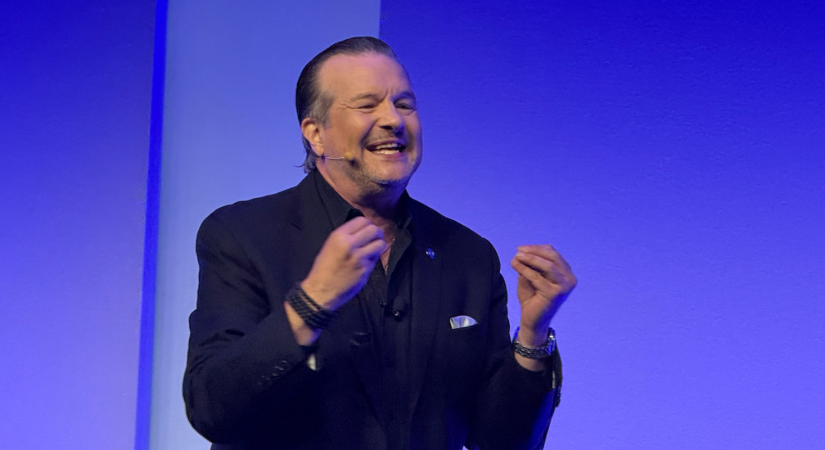
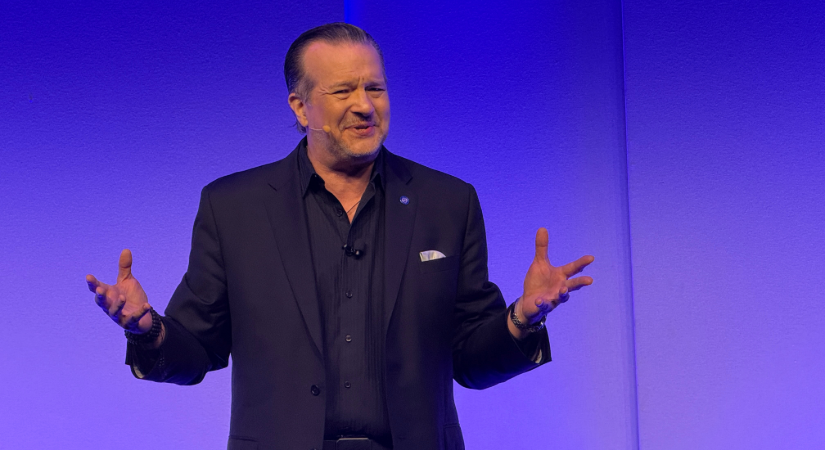
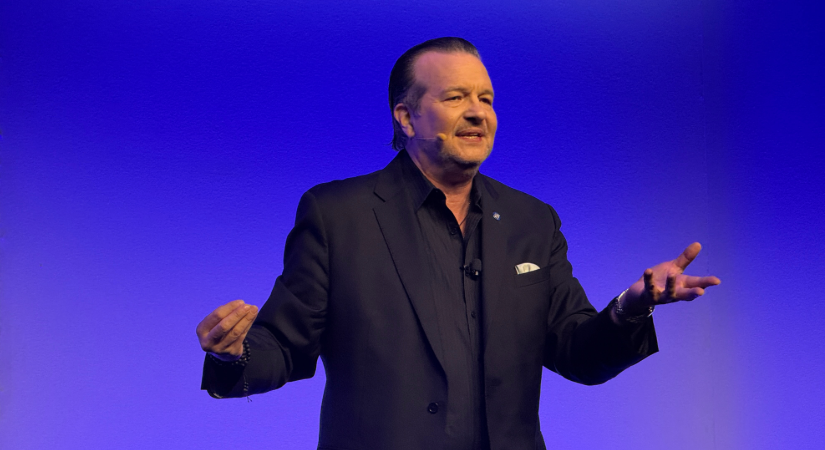
Presented by Leigh McMullen, Distinguished VP Analyst, Gartner
CISOs must rethink how they lead security, identity, and innovation as AI accelerates both opportunity and disruption. In the opening keynote, Leigh McMullen, Distinguished VP Analyst at Gartner, explored three focus areas for security leaders to tap into the human element to optimize the outcomes of their cybersecurity program.
Key Takeaways
- Enterprise Investment in AI to Modernize IAM: “Rather than adding new tools to fragile stacks, organizations can use AI investment to accelerate IAM modernization. As customer, partner, and employee interactions become increasingly machine-mediated, strong identity and trust controls move from necessity to differentiator."
- Normalization of Cyberattacks to Redefine How We Win: “Resilience, not prevention, is the strategy organizations can actually win. If the objective shifts to limiting impact, maintaining critical operations, and recovering quickly, then mitigation becomes functionally equivalent to prevention from a business outcome perspective.”
- Lowering the Bar for Innovation: “Tasks such as building test environments, simulating attacks, generating detection logic, or rehearsing recovery scenarios no longer require large, specialized teams or long planning cycles. When experiments are low-risk but tied to real systems and real outcomes, teams gain hands-on experience while producing artifacts the organization can actually reuse.”
Journalists can read more in the press release “Gartner Identifies Strategic Focus Areas for CISOs to Seize Moments of Opportunity Among AI Chaos.”
Outlook For Cybersecurity Threats: Prioritizing with Gartner's 2026-2027 ThreatScape
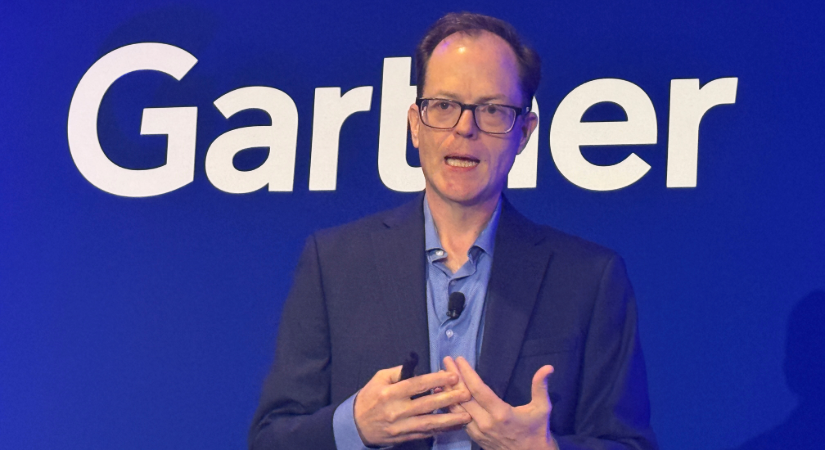
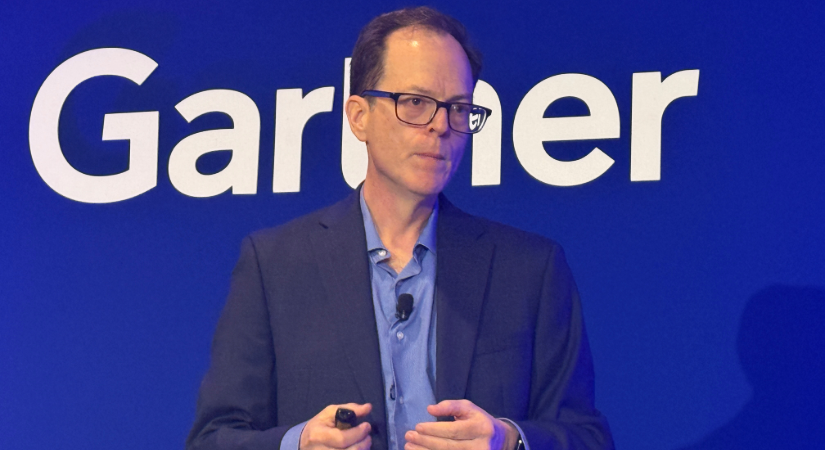
Presented by John Watts, VP Analyst, Gartner
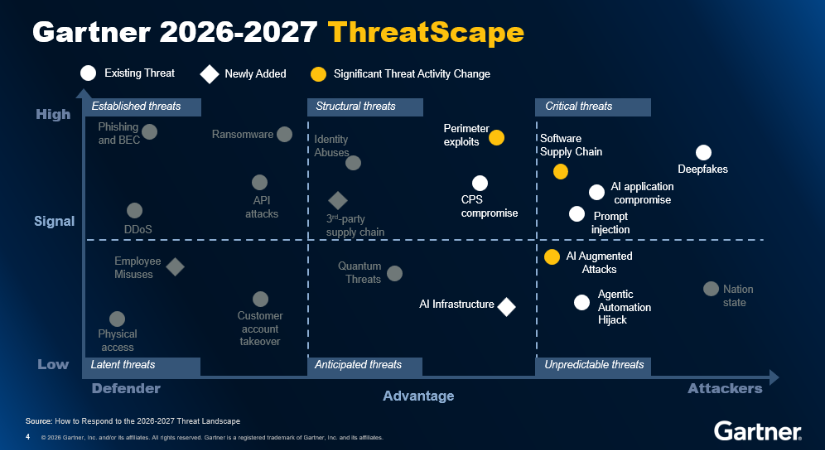
The cybersecurity threat landscape is a moving target making it increasingly difficult for organizations to address every risk with limited resources. In this session, John Watts, VP Analyst at Gartner, discussed the 2026-2027 threat landscape (ThreatScape) to help organizations to optimize their prediction and prevention, enhance detections, and prepare for new and emerging threats.
Key Takeaways
“There are four critical and unpredictable threats where attackers hold a significant advantage to successfully exploit weaknesses in targeted organizations.”
AI Application Compromise: “AI application compromise is an anticipated threat as attackers target the growing number of production-ready public-facing and internal enterprise AI tools.”
Identity Impersonation Using Deepfakes: “The advent of GenAI has dramatically increased the volume, fidelity and accessibility of deepfake creation across voice, video, and images, both as pre-recorded artifacts or generated in real-time.”
Software Supply Chain Threats: “Software supply chain risks are escalating as attackers increasingly compromise third-party components, open-source libraries and development tools used to create enterprise applications.”
- Prompt Injection: “Prompt injection is a cybersecurity threat targeting AI systems, especially those using large language models (LLMs). Attackers manipulate prompts to alter the AI’s behavior, causing it to leak sensitive information, perform unauthorized actions, or bypass controls.”
Journalists can learn more about these threats in the press release “Gartner Identifies Four Critical Threats Requiring Urgent Improvements from Cybersecurity Leaders.”
Technical Insights: Secure AI Agents Before They Go Rogue
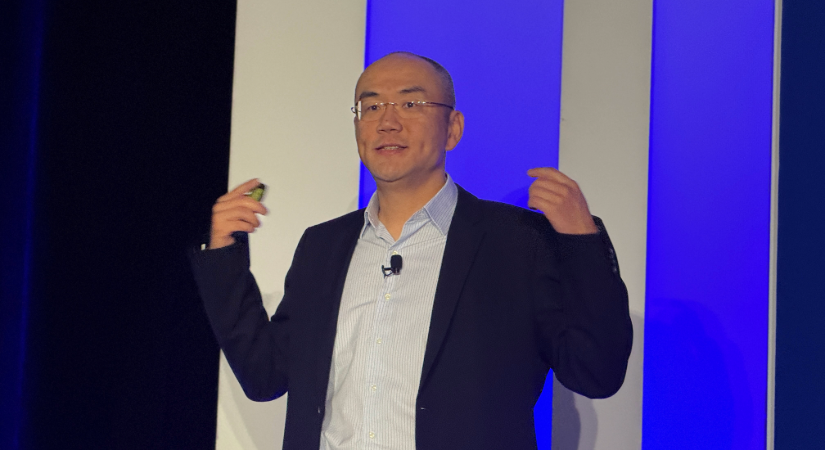
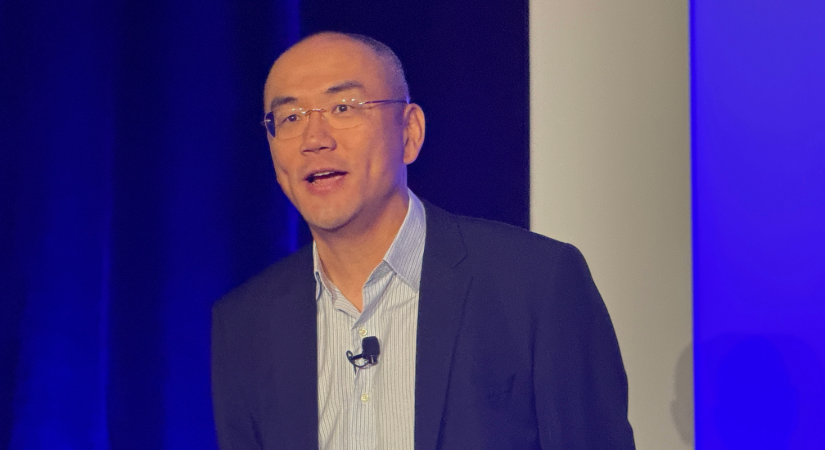
Presented by Dennis Xu, VP Analyst, Gartner
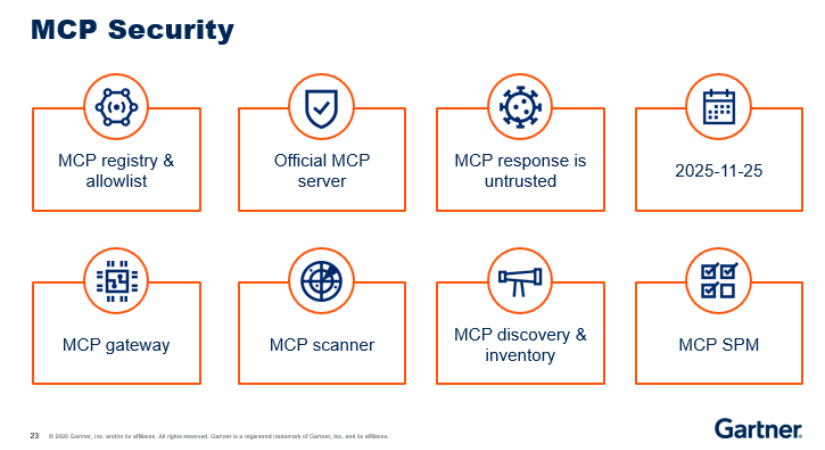
CISOs are increasingly tasked with securing all AI agents being built or adopted across the business against new and dangerous threats like indirect prompt injection. In this session, Dennis Xu, VP Analyst at Gartner, discussed the top security risks associated with LLM-based AI agents, strategies for managing rogue agent threats, and best practices for securing MCP implementations.
Key Takeaways
- “Every token is an attack surface, embracing full context security by filtering all inputs using guardrails before sending them to LLM for inferencing processing.”
“An AI agent can update itself at runtime and results in posture drift. Perform continuous posture management and shift right to defend your agent.”
“Agents, just like chatbots, could be jailbroken. Unreliable reasoning, high agency, access to sensitive data access and privileged system access all make AI agents risky.”
“Indirect prompt injection of agents is hard to automate, as malicious payload, such as malicious websites or malicious email, has to be manually planted.”
“Model context protocol (MCP) security involves several aspects including MCP registry & allowlist, the preference to use official MCP servers, MCP gateways and MCP scanners.”
Journalists can receive additional information and/or request an interview with Dennis Xu by contacting Matt LoDolce at Matt.LoDolce@Gartner.com.

It’s not too late to join the conference
Tune in again tomorrow for more updates from the conference.
Media contact
Matt LoDolce
Gartner
matt.lodolce@gartner.com
Meghan Moran
Gartner
meghan.moran@gartner.com


Latest releases
About Gartner
Gartner (NYSE: IT) delivers actionable, objective business and technology insights that drive smarter decisions and stronger performance on an organization’s mission-critical priorities. To learn more, visit gartner.com.