Embed values into daily work to drive performance, engagement and lasting cultural change.
- Gartner client? Log in for personalized search results.
Drive change toward the culture you want
Fostering culture is a top priority for CHROs in 2026, and when culture is at its best, people do their best work, businesses see greater results and organization-wide standards are clear. But today, leaders see culture as a barrier with less than half of CHROs saying their culture drives employee performance. Employees seem even less enthused with only 43% of them believing that an organization’s culture helps them succeed. CEOs even cite culture as a top challenge when it comes to growing an organization.
Because of this, leaders often talk about wanting a “high‑performance culture,” even if they aren’t always clear on exactly what they want to change. This points to a larger issue overall: the way people are expected to work has changed but culture hasn’t kept up. The solution is clear. In order for a business to succeed in an evolving landscape, culture has to evolve too – with CHROs at the helm.
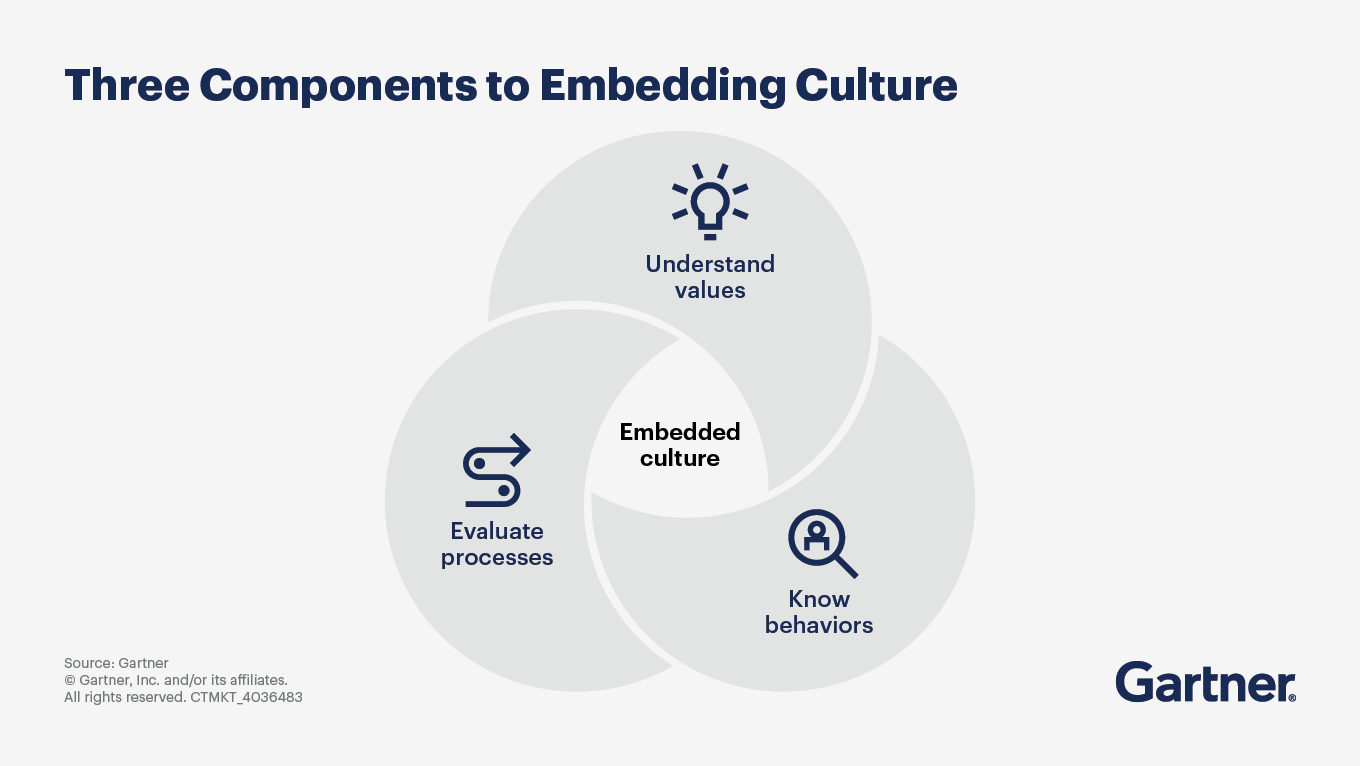
Three steps to actually make culture stick
When employees understand company values — and see them consistently reflected — they’re more likely to act in alignment. Yet only 48% of employees feel personally connected to their organization’s values.
To embed culture for lasting impact, CHROs must take three practical steps: Meet employees where they are, define what values look like in action and reinforce those values through business processes.
Step 1: Differentiate values proficiency levels
Not all employees start with the same understanding of company values. Gartner finds fewer than half know what drives their organization’s culture. That’s why CHROs must diagnose proficiency gaps and tailor support to meet employees where they are.
By segmenting employees based on their comfort and familiarity with values, HR can provide targeted resources that build confidence and clarity. This approach helps employees grow from learning to living — and eventually leading — the culture.
Step 2: Specify do’s and don’ts for actionable behaviors
Values must translate into clear, everyday actions. Only 49% of employees know which behaviors actually align with the desired culture. Without guidance, even well-intentioned employees may struggle to act accordingly.
CHROs should define what “good” looks like — and doesn’t — to remove ambiguity. By clarifying behaviors that reflect each value, HR empowers teams to act with confidence and consistency in their day-to-day work.
Step 3: Reinforce values in business processes
Culture isn’t just about people — it lives (or dies) within business processes. Yet only 40% of employees feel their workflows support organizational values, and 43% of HR teams report misaligned systems.
To embed culture systemically, HR must identify “culture catalysts” that enable desired behaviors and “culture collisions” that undermine them. Adjusting processes to reinforce values ensures that culture is sustained — not just stated.
What to do next
Equipping leaders to drive culture evolution in the midst of AI-driven change is just one critical step in the CHRO’s mandate to strengthen culture to power performance. The other steps in this imperative include:
Anticipating the impact of AI and other emerging trends on the organization's culture and articulating a forward-looking vision for how the culture needs to evolve.
Building CEO/Board/C-suite buy in for culture evolution and discussing culture implications specifically as part of strategic planning agendas.
Embedding desired cultural norms into the organization during work transformation. Ensure that processes, budgets and technology – not just communications and individual behaviors – reflect and reinforce how the culture needs to evolve.
Spotting points of dissonance or atrophy in the current culture. Gather feedback from all levels on where the culture drives or conflicts with performance ambitions.
For more on how Gartner helps drive success on this and other mission critical priorities for CHROs, speak to us today.
FAQs on embedding culture
What does it mean to embed culture into daily work?
Embedding culture means making company values and behaviors part of employees’ everyday tasks, decisions and interactions. When culture is reflected in business processes, employees can see those values in action and reinforce them through their work.
What are “culture catalysts” and “culture collisions”?
Culture catalysts are elements that support the desired culture — like team-based goals that promote collaboration. Culture collisions are factors that work against it — such as outdated tools that hinder communication. Identifying both helps HR know where to invest.
Why is it important to define behaviors for each company value?
Values can feel abstract. Defining specific behaviors helps employees understand what those values look like in action — and what to avoid. This clarity removes guesswork and builds confidence in demonstrating the desired culture.
Attend a Conference
Join Gartner analysts and your peers to accelerate growth
Gather alongside your peers in Orlando to gain insights on emerging trends, receive one-on-one guidance from a Gartner expert and create a strategy to tackle your priorities head-on.
26 – 28 Oct 2026
Gartner HR Symposium/Xpo™
Orlando, FL

Drive stronger performance on your mission-critical priorities.